
Panel 2 + 3 Questions
In Greek, Cleopatra means "Glory of her father", but WHO WAS SHE?
She lived alongside one of the Seven Wonders of the ancient world, but
WHO WAS SHE?
A descendant of the Ptolemaic dynasty that lasted almost 300 years, but WHO WAS SHE?
Married at the age of 18 to her 10-year-old brother, she became queen, but WHO WAS SHE?
She had children with two great world leaders, Julius Caesar and Mark Antony, but WHO WAS SHE?
She described herself as the last reincarnation of the goddess Isis, but WHO WAS SHE?
The daughter of Ra, the lady of the two lands, Cleopatra Philopator... but WHO WAS SHE?
WHAT IS AUGMENTED REALITY?
Augmented Reality (AR) overlays computer-generated images, text, sounds, or animations onto the real world. The real environment is not replaced; instead, it is enhanced with additional information.
In CLEOPATRA: THE EXPERIENCE,
AR is accessed using your smartphone by scanning QR codes located at five different points throughout the exhibition. Animations will then appear on your screen, enhancing what you see
around you.
We aim to make this experience accessible to everyone. However, AR technology may not be compatible with all smartphone models or software versions, and its performance can be affected by the stability of your mobile data or Wi-Fi connection. Thank you for your understanding, and we hope you enjoy exploring!
Scan the QR codes on the AR panels located throughout the exhibition, and take part in interactive challenges and questions. Complete all five trials to unlock your digital artefact.
INSTRUCTIONS:
1. Scan the QR code
2. Scan the AR code to reveal Augmented Reality
3. Do the quiz
4. Receive your personal artefact
LETS GET STARTED
1. Scan the qr code
2. Scan the ar code
Augmented Reality
Chapter I – Cleopatra
Chapter II – Throne
Chapter III – Julius Caesar
Chapter IV – Mark Antony
Chapter V – Isis
DIGITAL ARTEFACTS
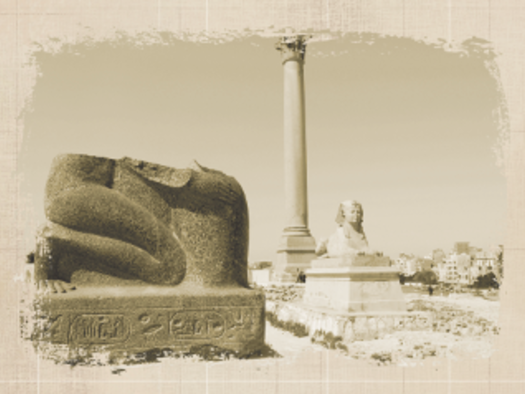
Alexandria
Capital of the Mediterranean
The city of Alexandria was founded by Alexander the Great in 331 BC on the site of an ancient fishing village called Rachedet. The choice of location was by no means accidental. As Strabo notes in his Geography (17, 7), a contemporary of Cleopatra: "The advantages of the location were varied. On the one hand, it was surrounded by two seas; on the north, the so-called Egyptian Sea (the Mediterranean), and on the south, Lake Marea, also called Mareotis. The Nile fills it via many canals, both from above and from the sides, so the traffic is much greater than that coming from the sea".
As the seat of the court, it soon grew with palaces and large buildings.
The architect Dinocrates was responsible for this, designing a hippodamian style plan, in other words, with parallel streets that cross each other. It is estimated to have had a population of at least 400,000 people.
As heir to the throne, Cleopatra spent much of her life in Alexandria, the city where the Egyptian monarchs lived. She only left when she came into conflict with her husband and brother, Ptolemy XIII, and was forced into exile in Syria. Displaying extraordinary political vision and skills in diplomacy never seen before - in the man's world in which she moved - she plotted her return by seeking Julius Caesar's support.
It is not known how the queen met Caesar in Alexandria, but the republican must have been impressed by her political and diplomatic skills. Her main objective was to retain the throne:
only then could she give her people the prominence they had lost in recent centuries and, ultimately, their independence.


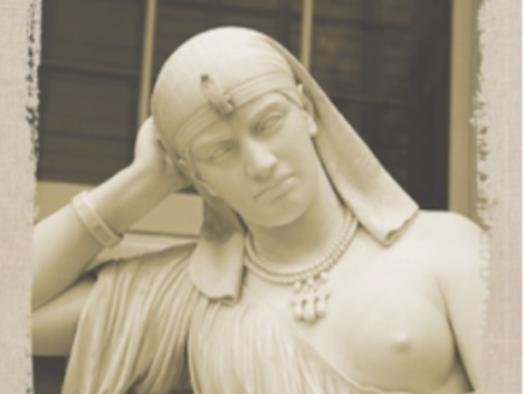
The mystery of Cleopatra's face
Ancient sources tell us of a very beautiful woman who used her charms to seduce the great politicians of the time. Dion Cassius says in his Roman History (42, 34, 4) that "she was indeed the most beautiful of women and then, in the prime of youth, she was especially distinguished. She had a lovely voice and knew how to deal with everyone agreeably.” The Roman historian did not actually meet her however and wrote these lines almost three centuries after Cleopatra's death.
The problem with the sculptural portraits that we can see today, is that there is no way of knowing whether they show her likeness accurately or not.
We cannot be sure, for example, that the busts preserved in Berlin, Rome or Brooklyn, amongst many others, are those of Cleopatra.
Only a relief, at the back of the Egyptian temple of Dendera, where we see her with her son Caesarion, affords us a secure portrait with her name - which is of course highly idealised, as the features are identical to those of other queens of the Ptolemaic period.
We do have many coins from her reign. Are the portraits on these more realistic? If so, we see in them the profile of a woman with a receding chin or an aquiline nose; nothing like the idealised image offered to us in cinema.
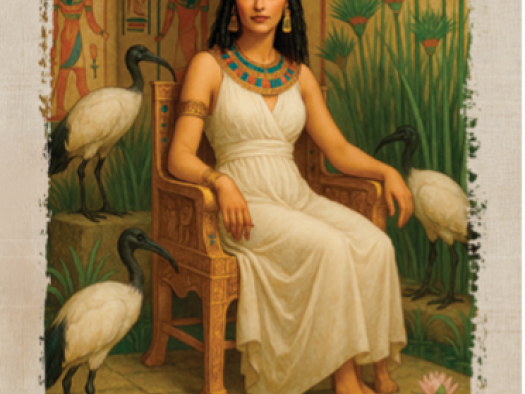
Considering all the analysed data, we must conclude that it is impossible to get an idea of Cleopatra’s actual appearance. The portrait we use of her in this exhibition is a free interpretation.
Considering all the sources and evidence, we must conclude that it is impossible to get an idea of Cleopatras actual appearance. The portrait we use of her in this exhibition is a free interpretation.


Cleopatra's wisdom and legacy
Cleopatra's ability to thrive in a male-dominated world was not based solely on her charisma, but also on her intelligence and years of study. Plutarch, in his biography of Mark Antony, acknowledges: "Cleopatra was said to speak with ease the languages of many other peoples; the Ethiopians, the Troglodytes, the Hebrews, the Arabs, the Syrians, the Medes and the Parthians. And there was no king whom she had to answer through an interpreter..." (Parallel Lives, Antony, 54).
The setting of Alexandria, with its legendary library and museum (a centre of research and learning), undoubtedly played a crucial role in her education. Although her teachers’ names are not known, we suspect that she must have had the best teachers of history, philosophy, rhetoric, astronomy and mathematics; disciplines deemed essential for the education of a ruler in the Hellenistic world.
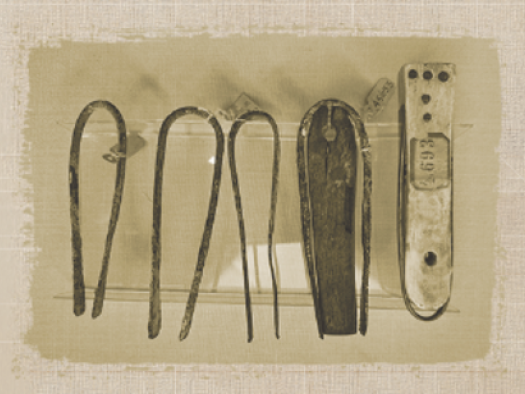
Several works are attributed to Cleopatra, although unfortunately only fragments or indirect references have survived. One of the fields in which she showed particular interest was medicine and cosmetics. Galen, the influential Greek physician of the 2nd century CE, mentions Cleopatra's prescriptions in his writings, particularly in relation to hair dyes and skin treatments.
For example, as a remedy for alopecia, mentioned by Galen, the Egyptian queen recommended a treatment of a paste made from burnt mice, rags, horse teeth, bear fat, deer marrow and reed stalks, mixed with honey.
Another area in which she has gained notoriety is that of metrology, the study of weights and measures. It is believed that she wrote a treatise on this subject, possibly with the aim of standardising units of measurement in Egypt to facilitate trade and administration.



A journey through Cleopatra’s memories
Metaverse
Attention! You are about to begin an extraordinary journey. In the next room, the magic and mysteries of Cleopatra’s life await you. First, you will descend into the ancient catacombs of Alexandria, where the kings and nobles of the city were laid to rest. The gods of the Egyptian pantheon; Horus, Isis, Osiris, and Serapis, will welcome you and reveal some of the secrets of their worshipping customs.
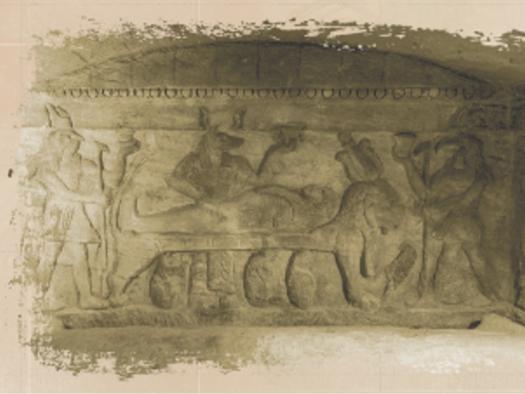
As you continue along the winding passageways of the catacombs, you will witness a funeral, where the family of the deceased has gathered in one of the lower chambers to bid their final farewell to a loved one.
Next, you will travel back in time, to the Siwa Oasis. You must correctly answer the questions posed by the sphinxes lining the avenue leading to the Temple of Amun. Answer the questions, by locking your sight on the correct answer. After that, you will be witnessing the coronation of Alexander the Great.

Once you have passed through its gates, walk slowly and respectfully along the corridors of this sacred place. At the end, you will find the hypostyle hall of the temple, which shelters the statue of the god Amun, the Zeus of the ancient Greeks. Before you stands Alexander the Great, about to be crowned by the Egyptian god as the new Pharaoh of the Nile Valley.

But your adventure does not end there. After Alexander’s coronation, one of the most challenging trials begins. The passage of time is relentless, for humans and gods alike. You must walk across the cosmic void along a path of stones that gradually opens before you as you move forward.

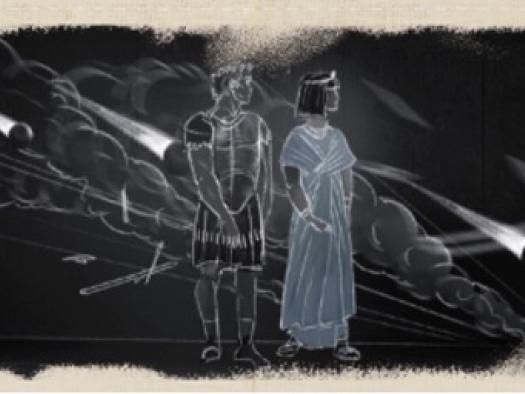
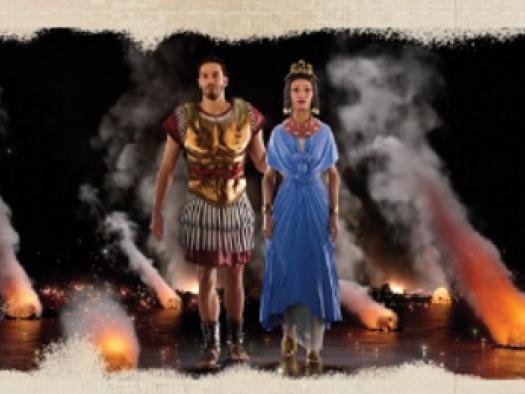
At the end of this path lies the tent of Mark Antony, in the midst of the Battle of Actium. Be careful, as fireballs launched from Octavian’s ships may fall around you.

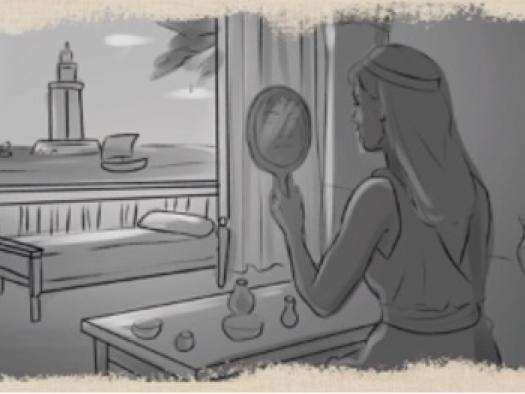
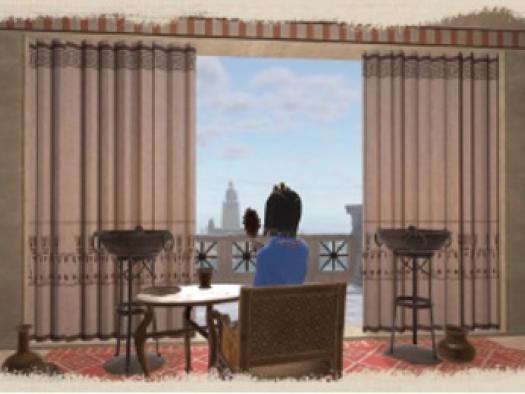
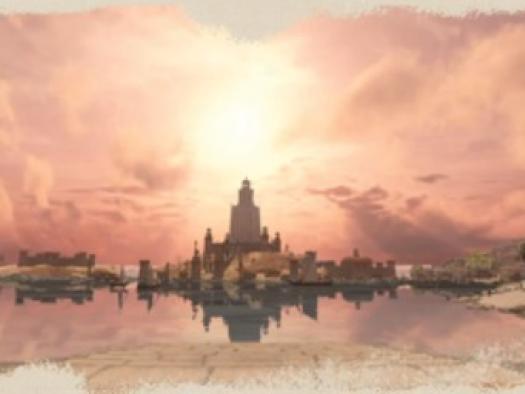
All is lost. Mark Antony and Cleopatra have been defeated by the Roman forces. Walk towards the balcony of the Egyptian queen, who awaits her fate in the city of Alexandria. From there, you will see the bay, the Lighthouse, the houses of the city, and the queen herself, standing in quiet despair, facing the uncertainty of destiny unfolding before her.
The men in Cleopatra’s life

Cleopatra ascended to the throne of Egypt at the age of 18, following the death of her father. In keeping with the tradition of the Ptolemaic kings, Cleopatra then married her younger brother, Ptolemy XIII. From the outset the relationship was strained as, pushed by his advisors, Pothinus and Achillas, Ptolemy tried to overthrow his sister. She was forced to flee to Syria to save her life. The marriage ended when the young man drowned in the Nile after being defeated by the forces of Julius Caesar, who backed Cleopatra.
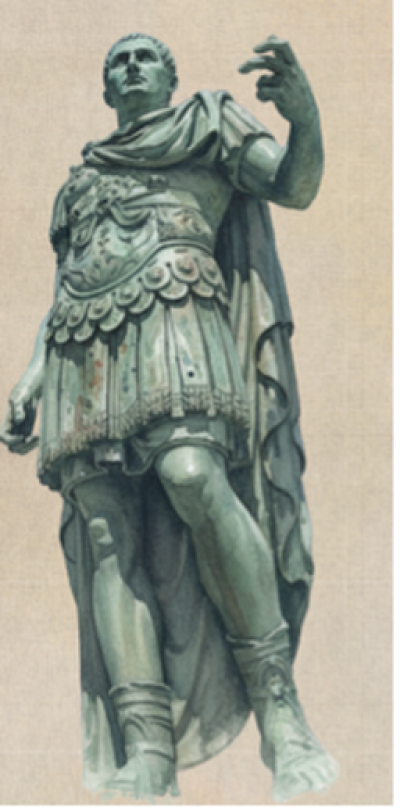
The Queen's life is linked to two men, Julius Caesar and Mark Antony. Despite all that has been said about her ‘frivolous character’, we do not know the name of any other lover.
Julius Caesar arrived in Alexandria in 48 BCE in pursuit of his rival Pompey. But there, he discovered that Pompey had been assassinated by Ptolemy XIII. Caesar then found himself in the middle of a dynastic dispute between the two brothers. Taking advantage of the circumstances and realising that Egypt could be Rome's breadbasket, he decided to intervene to stabilise the region, thereby guaranteeing the supply of wheat. By joining Cleopatra, Caesar gained a strong ally in a strategic eastern Mediterranean country. The queen, on the other hand, thanks to the Roman legions, would be able to regain the throne and consolidate her position on it.
The two spent several months together in Egypt, sailing the Nile and enjoying the opulence of the court in Alexandria. This union led to the birth of Ptolemy Caesar in 47 BCE, known as Caesarion. Cleopatra always claimed that Caesar was his father, a claim that, although never acknowledged by the Roman leader, strengthened her position.

Some time later, after Caesar's death, Cleopatra met Mark Antony in 41 BCE, when she summoned him to Tarsus to answer for his alleged support of her opponents. The Egyptian queen appeared in a lavish galley, disguised as the goddess Aphrodite. Mark Antony was captivated, consolidating their love and political relationship. Together they had three children: the twins Alexander Helios and Cleopatra Selene II, and Ptolemy Philadelphus.

By allying herself with Mark Antony, Cleopatra, besieged by Rome, had her protection guaranteed. In return, Mark Antony gained access to the vast riches of Egypt, which he needed to finance his military campaigns against Octavian, his great rival in Rome. This relationship, which defied Rome, was perceived as a serious threat. The tension between Octavian and Antony culminated in the naval Battle of Actium (31 BCE), where the forces of Cleopatra and her lover were defeated. Afterwards, they both returned to Alexandria, where they committed suicide to avoid being captured and humiliated by their enemy in Rome.
Cleopatra in the arts
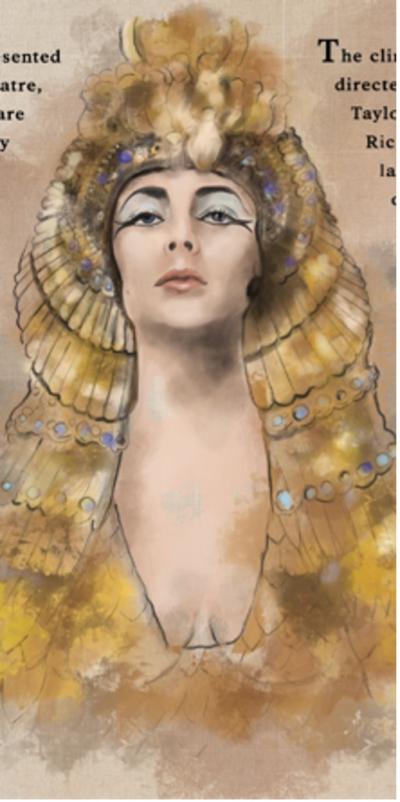
Cleopatra has been one of the most represented historical figures in film, television, and theatre, becoming a true cultural icon. William Shakespeare was a pioneer in writing his successful tragedy Antony and Cleopatra around 1606, a play that is still performed today. Its plot offers a more psychological and poetic view of the queen, centred on the conflict between love and political duty.
Shakespeare's theatre influenced early cinema when in 1899, the Frenchman Georges Méliès directed a short film titled Cléopâtre, a silent and very brief production that already showed interest in the great characters of antiquity. Since then, Cleopatra appeared repeatedly in silent films following the trail of English theatre with adaptations like the 1908 version directed by J. Stuart Blackton and Charles Kent, or the Italian film Cleopatra from 1912.
The climax came in 1963 with the blockbuster Cleopatra, directed by Joseph L. Mankiewicz and starring Elizabeth Taylor, alongside Rex Harrison as Julius Caesar and Richard Burton as Mark Antony. This film, shot largely in London, became a historical event not only for its artistic ambition but also for its exorbitant budget (starting at 2 million US dollars and ending up costing nearly 44 million), making it the most expensive film ever made at that time.
Elizabeth Taylor portrayed Cleopatra as a powerful, sophisticated, and magnetic woman, reinforcing an image of the queen that has shaped the collective imagination to this day.
On television, her figure has also been revisited in various productions, notably the 1999 miniseries Cleopatra, directed by Franc Roddam, which allowed for a more detailed narrative of her life with a modern approach.
Cleopatra as Isis
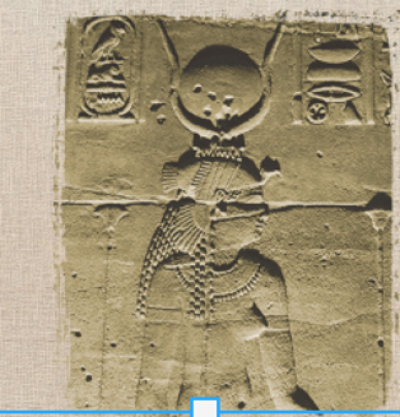
Cleopatra VII, beyond her political knowledge and natural charm, cultivated a divine image, identifying herself in particular with the goddess Isis. Her role as High Priestess of Isis was not merely ceremonial; it was a declaration of her legitimacy, her power and her intrinsic connection to the very essence of Egypt.
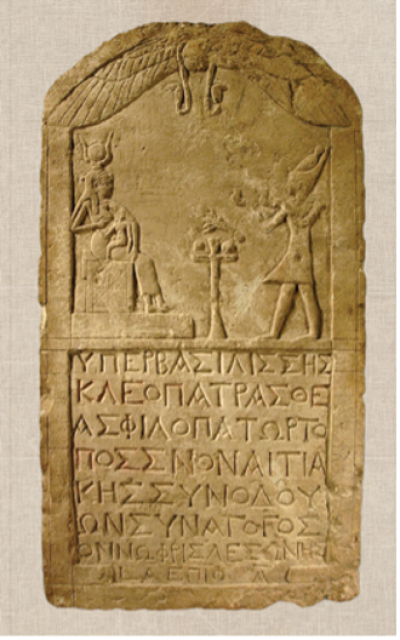
Isis - the great mother, the powerful magician, protector and restorer - embodied many of the qualities Cleopatra sought to project: strength, fertility, wisdom and devotion to her people. This feminine deity is actually one of the oldest in the Egyptian pantheon.
We do not know her origin or where her cult was born, but she is one of the most notable deities of the pharaonic world.
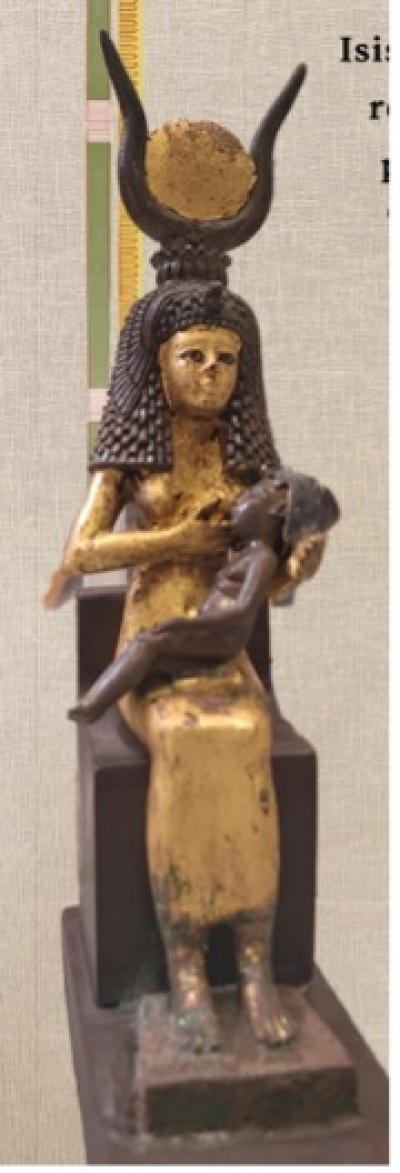
By presenting herself as the earthly incarnation of Isis, the queen sought to consolidate her authority both with her Egyptian subjects and with foreign powers, especially Rome.
As High Priestess of Isis, she actively participated in rituals and ceremonies dedicated to the goddess. These rituals, imbued with a deep, age-old tradition, were intended to maintain the cosmic balance, ensure the fertility of the land, protect the people and honour the gods.
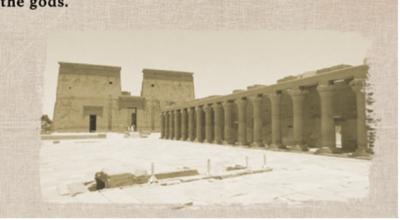
Cleopatra's participation in these rituals was no mere formality. It was an active way of connecting with her people on a spiritual level and reinforcing her image as Egypt's protector.
Immersive room
1. Alexandria
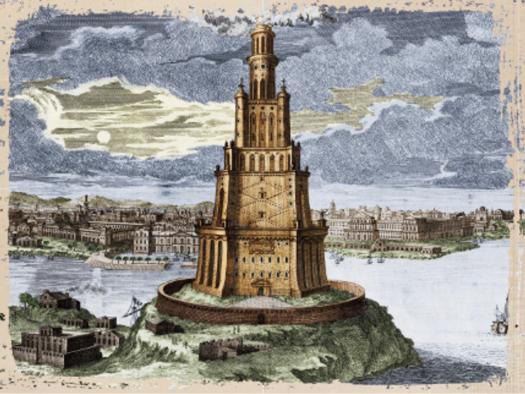
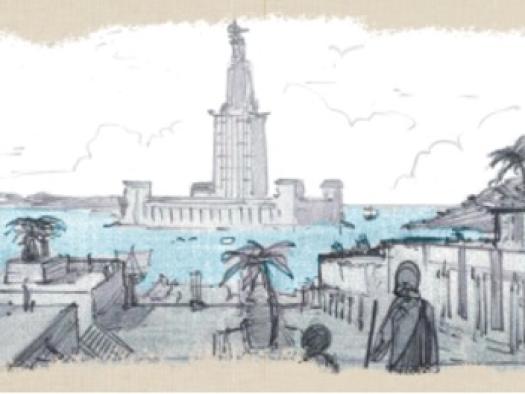
Visit Alexandria in all its splendour, home to the legendary Lighthouse, one of the Seven Wonders of the Ancient World. Cleopatra's palace stood in the city before it sank to the bottom of the sea after a series of earthquakes.
2. Coronation
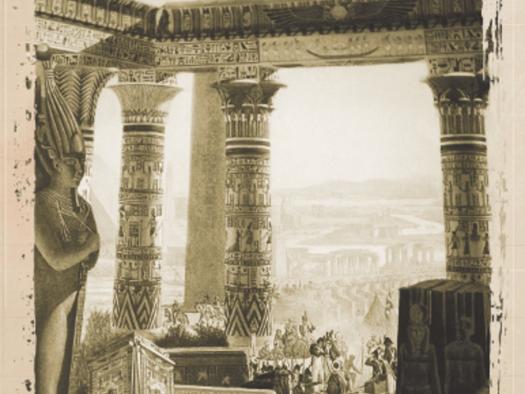
Cleopatra walks on the primeval waters of life as the natural heir to the land of the Nile. She sits on the throne and is embraced by the life-giving rays of the god Ra and the wings of the goddess Isis. In this way, the gods of Egypt welcome her as her people kneel to pay their respects to the new queen.
3. Isis
Enter the Temple of Isis, where ancient rituals were held. Witness the myth of Osiris, accompanied by the sound of the sacred instrument of the goddess, the sistrum. Isis used it in ceremonies to invoke the energy of life. Sound was linked to renewal, fertility and the rhythm of nature.
4. The library
The Library of Alexandria, one of the world's most famous centres of learning, formed part of the Museum. Its wealth of knowledge, including Cleopatra's writings, was lost forever due to their destruction in various incidents. Cleopatra, a well-known patron of the arts and a cultured queen, would surely have spent time within its walls, learning, studying or approving legal actions with her famed use of the word "ginesthoi" (meaning “make it happen!”).
5. The encounter
Cleopatra's need for Caesar's support to claim the throne of Egypt led to the famous meeting between the two. Some have suggested that the queen was smuggled to meet him inside a rolled-up carpet. This moment was the beginning of their intimate relationship, which led to the birth of their son: Ptolemy XV Caesar, known as Caesarion. Although his legitimacy remains the subject of debate among historians, he ruled alongside his mother until her defeat at the hands of Octavian.
6. Betrayal
Following Caesar´s rise to the highest levels of political and military power, he was regarded as a traitor to the Republic; the senators, fearing that he would proclaim himself king, conspired and he was assassinated during a session of the Senate.
7. Mark Antony
After Caesar's death, chaos began. The Triumvirate took over, made up of three rulers, one of whom was Caesar's former general, Mark Antony. As ruler of the eastern provinces, including Egypt, he was a key figure in Rome's survival. Cleopatra sought an alliance by offering Egypt's resources and, during their meeting, the two fell in love.
8. The Battle of Actium
With the republic in chaos, Octavian, another member of the Triumvirate and official heir to Julius Caesar, opposed Cleopatra and Mark Antony. This led to a civil war that would be decided at the Battle of Actium. Cleopatra and Mark Antony faced defeat, spelling the end of her reign.
9. Death of a queen
After losing the war, they decided to die on their own terms. Mark Antony committed suicide in despair at his defeat and in the belief that his beloved Cleopatra had already died. Cleopatra decided to die with the dignity befitting a queen. The most popular theory, that she was bitten by a viper, seems to be a romantic interpretation, as this would have been a slow, painful death. No doubt someone with her knowledge of medicine and poisons would have chosen a less painful way to end her life. Her death marked the end not only of the Ptolemaic kingdom, but also of independent Egypt.
10. Cleopatra’s legacy
The story of the most captivating queen of the ancient world did not end here. Her descendants continued her legacy: Caesarion reigned briefly, but was probably assassinated by Octavian, thereby eliminating all rivals for the throne of Rome. Of the three children she had with Mark Antony, Cleopatra Selene II was to become queen of Mauritania. Like her mother, she was a successful ruler and a symbol of female empowerment.
The mystery of Cleopatra’s tomb
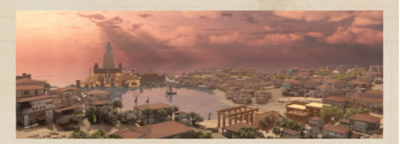
Virtual Reality
We understand from Plutarch that Cleopatra was buried in Alexandria alongside Mark Antony, in a temple dedicated to Isis in 30 BC. According to his account, the tomb was to be a monumental mausoleum, befitting the last queen of Egypt and in line with the Ptolemaic tradition of associating royal power with divine worship, in this case, that of Isis, with whom Cleopatra symbolically identified.
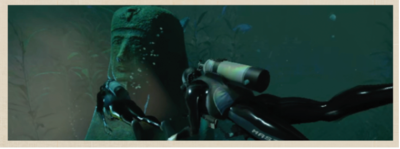
However, the earthquakes, tsunamis and land subsidence that have affected the city over the last two thousand years have caused large areas of the ancient port and urban center to be submerged beneath the Mediterranean waters. This has led researchers to think that Cleopatra may be forever lost beneath the sea. Recently, the remains of the temple of Isis have been identified, but nothing of Cleopatra’s tomb.
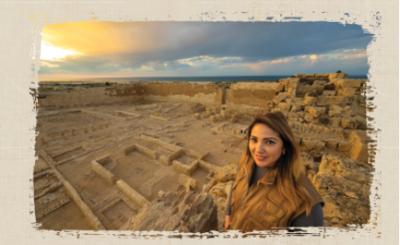
However, another hypothesis, defended by Dominican Egyptologist Kathleen Martínez since 2005, posits that Cleopatra's tomb is actually in Taposiris Magna, about 60 kilometres west of Alexandria. Taposiris Magna housed an important temple dedicated to Osiris, the god of resurrection and the afterlife, and for Martínez, the choice of this site fits with Cleopatra's identification with Isis, the wife of Osiris. According to this interpretation, Cleopatra would have sought a tomb that symbolised eternal union with Mark Antony, just as Isis and Osiris represent regeneration and life after death.
Although the hypothesis can’t definitively confirm that Cleopatra's tomb is located there, Martínez argues that the presence of complex underground structures and unexplored passages could conceal a burial site, not only of Queen Cleopatra but also of other members of the Ptolemaic dynasty, of whose tombs we also know nothing. Ultimately, the mystery of Cleopatra's tomb remains unresolved and continues to be one of the great enigmas of Egyptian archaeology.
As the question of where Cleopatra’s tomb lies and what it looked like remains unanswered, everything seems to indicate that it rests beneath the waters of Alexandria - yet no one can say for certain. We have recreated our own vision of this great archaeological mystery in Virtual Reality.


The Making of
Cleopatra: The Immersive Exhibition
Drafts and first preparations
3-6 months
Almost two years of creation and development are undertaken by a team of experts to bring any of our new shows to life before we can welcome you through the doors.
Firstly, the topic and title for the new show has to be chosen, the creative team and curators contracted, research conducted with historians and advisors, and for Cleopatra, travels were made to the holy grounds where the story of our topic once took place.


Sketch and design of the immersive room
3-9 months
The writing of the script and the design of the layout for the exhibition starts.
When the first drafts are signed off, a team of 80 artists and animators, from the groundbreaking studio Sila Sveta and VR Coaster, come on board, and we start creating the characters and style frames for each scene digitally.
The sketches become temporary animatics. Next, they will be tested and approved. Then, the final renders will be implemented in the venue.
Simultaneously, the composer receives his instructions and starts to create themes for the main characters.


Finetuning ahead of the opening
Final months
In the last two months before any of our new exhibition premieres, more than 100 people are involved. The floorplan comes to life, and the construction team starts to build and paint new rooms, model scenic elements, and create a completely new look and feel for our venue. New technical equipment is installed, and tests for new elements – such as the hologram used in Cleopatra and the interactive tables – are carried out daily for several weeks to optimize their effectiveness.
Animators and studios from all over the world come to London to review the content on the big screen.
The composer and his musical team listen to the match of the content with his (up until then) digital soundtrack. The recording is done with the Symphonic Orchestra and Choir in Budapest.
And then, when everything is working according to plan, it's time to open our doors to the people we have all made it for...you!


Echoes and Melodies of Ancient Egypt
The music that has guided you through Cleopatra: The Experience was composed by René Merkelbach and recorded with over 50 members of the Budapest Art Orchestra, contracted by East Connection Music Recording.
The choir was recorded with 26 members of Capella Brabant Choir, conducted by Marc Versteeg at Artichoque Studio (The Netherlands).
The exhibition is designed to captivate you through all of your senses, with sound playing a fundamental role.
Myths and legends of the queen
Cleopatra is a mystery in herself, and the lack of direct and reliable sources about her has led to her image becoming almost mythical. The absence of stories that could flesh out the life of this extraordinary woman allowed some legends to circulate and grow, reaching us today as seemingly ‘absolute truths’, when really, they should be questioned. We have already discussed the myth of her beauty. Although there are mentions by later classical authors who speak of her incomparable beauty, the truth is that the faithful portraits we have of her through coins present a conventional-looking woman.

Then there is the popular legend of the pearl. Its origin is somewhat older and is usually set during a banquet with Mark Antony, where they would have wagered on who could offer the most expensive dinner.
According to the story, Cleopatra removed a highly valuable pearl from one of her earrings, dissolved it in vinegar, and drank it, thus winning the bet. Pliny the Elder (Natural History 9, 58) states that the pearl was worth “5 million sesterces”, the equivalent of about 13 million pounds today. The story is also related to traditions recorded by authors like Horace, although it does not appear in the more detailed biographies of Cleopatra written by Plutarch, leading many historians to consider it an exaggerated or even satirical anecdote.
Additionally, from a scientific perspective, it has been pointed out that a pearl, primarily composed of calcium carbonate, would require many hours or even days to dissolve in vinegar, casting doubt on the literalness of the account. Therefore, it is most likely a legend that reflects the economic power and sophistication of the queen.

In this regard, there are other stories rooted in the collective unconscious, such as the use of a carpet to present herself before Julius Caesar, although Plutarch clearly refers to a bedspread or bedcover. Then, the way Cleopatra took her own life, by the bite of a viper or cobra, has been questioned by ancient authors themselves. It is more likely that she ingested a quick and expeditious poison. Snake venom is slow and painful and does not always guarantee death, although it is a very poetic way to die.

Finally, there is also the myth of her bathing in donkey's milk, where it is said that Cleopatra immersed herself to keep her skin soft and youthful, even needing hundreds of donkeys to obtain the necessary amount. It’s a widely held idea in today's popular culture. However, no one mentions this in ancient sources. In fact, the first woman clearly attributed with the use of donkey's milk for cosmetic purposes is Poppaea Sabina, wife of Emperor Nero, as noted by Pliny the Elder (1st century CE), several decades after Cleopatra's death. Look around and you may find a little glimpse of how this myth may have looked like if it was true.
Credits
Cleopatra - the immersive experience
Produced by
Madrid Artes Digitales (logo)
Creative Production & General Director
Jelle de Jong
Curator & Scriptwriter
Nacho Ares
Executive Producer
César Cámara
Financial Director
Raquel Morales
Marketing & Sales Director
Alfonso Segura
International Operations Director
Joan Grané Cadafalch
International Project Manager
Ane Amenábar Urkiola
Laia Cuní
Paula Guardiola
Junior Producer
Robin Kooter
Production Assistant and logistics
Daantje Meurs
Head of Technical Team
Daniel Prieto
Technical Team
Rodrigo Querol de Oliveira
Alba Giménez Alcántara
Marketing Manager
Nicole Kruse
Venue Director Madrid
Damiana Cadirola
Coordination assistants
Irene Carreño
Jose Carlos Tornadijo
Jorge Librero
Sales Manager
David Areces
Elena Rubio
Administration
Miriam Ballesteros
Claudia Spagnuolo
Andrés Palacio
Madrid Artes Digitales Creative Committee
Nacho Ares, Marcos Cámara
César Cámara, Dalien Cohen
Artur Duart, Jelle de Jong
Henk van der Meijden, Elisa van der Meijden
Monica Strotmann, Juanjo Rivero
Jordi Sellas
Immersive Room & Hologram Content
Sila Sveta
Music Composition & Production
Audiocult, René Merkelbach
Metaverse & Virtual Reality Content
VR Coaster
Scenographer
David Pizarro
Lighting Design
Carlos Alzueta
Construction
Joan Jorba
A Nivel
Electricity & Cabling
Jesperman
IMMERSIVE CONTENT - SILA SVETA
Executive Directors
Arthur Kond
Alexey Kornev
Producer
Julia Bochkunova
Executive Production
Olya Nikolaeva
Alexander Us
Alexey Rozov
Production Director
Denis Sidorenko
Assistant to the Production Director
Elena Zaychenko
Art Director
Alexey Kornev
Supervisor
Natalie Ganzha
Concept Artists
Anna Zakharova
Alina Ramenskaya
Irina Ursul
Tatiana Kazakova
Marina Mazina
Graphic Designer
Dinara Akhmetova
CGI Artists
Andrey Osokin, Alexey Kornev, Inna Savina
Angelina Sokolova, Mikhail Lavrov
Yuri Kaplitskiy, Alexander Karelin
Arthur Terletskiy, Victor Mescheryakov
Alexander Mitin, Natalia Elnitskaya
Natalie Ganzha, Madina Ayupova
Vladimir Perminov , Alexey Ugrumov
Nikolay Perminov, Vladislav Nekrasov
Nikita Gribanov, Danil Kotyazhov
3D Character Design
Gleb Iasinitskii
Vladislav Kalinin
Daria Shurkina
Alexander Antonov
Modellers
Ivan Maximov, Arsen Suleymanov
Sergey Akulyonok
Sculptor
Azat Batyrov
Animators
Anton Fedorov
Georgii Pliev
ORIGINAL SOUNDTRACK - AUDIOCULT
Original Soundtrack
Audiocult
Music Composition & Production
René Merkelbach
Musical Arrangements & Orchestration
Federico Solazzo
Tom Schipper
Marco Kuypers
Ignacio Ramirez
Head of Sound Design & Sound Effects
Anouk Verdonk
Additional Sound Design
Tim Verstegen
Orchestra
Recorded with 51 members of the Budapest Art Orchestra,
contracted by East Connection Music Recording
Choir
Recorded with 26 members of
the Capella Brabant Choir,
directed by Marc Versteeg at
Studio Artichoque (The Netherlands)
Solo Violin
Cecilia Baesso
Immersive Audio Producer
Juan Delgado Serrano
Voice Recording
Noise
Voices
Cleopatra: Cristal Lazare
Narrator: Rafael Azcárraga
César/Amón: David Robles
METAVERSE & VR CONTENT – VR COASTER
General Director
Thomas Wagner
Operations Director
Robin Herrmann
Producer & Creative Supervision
Philip Greiner-Petter
Senior 3D Artist
Dennis Rappl
Senior 3D Animator
Tirsa Reeh
Junior Character Designer
Kim Michelle Treib
3D Modelling
Hermann Fuchs
Project Coordinator
Victoria Herrmann
Head of Customer Service
Melissa Dannewitz
HOLOGRAM CONTENT – SILA SVETA
Creative Director
Arthur Kond
Producer
Julia Bochkunova
Production Executives
Olya Nikolaeva, Alexander Us
Alexey Rozov
Art Director
Zoya Kharakoz
Supervisor
Natalie Ganzha
Concept Artist
Tatiana Kazakova
CGI Artists
Zoya Kharakoz
Victor Meshcheryakov
Yuri Kaplitsky
Vitaly Zykov
3D Character Artists
Gleb Iasinitskii, Vladislav Kalinin
Daria Shurkina
Alexander Antonov
Modeller
Arsen Suleymanov
Sculptor
Azat Batyrov
Technical Director
Oleg Rikota
Video Engineer
Alexander Katsev
Civil Engineer
Artem Kovalev
Lighting Design for Hologram
Ilya Shatin
Musical Support for Hologram
Pelican sound
Bas-Relief Production for Hologram
Blankvers
PHAROS MAPPING, CEILING PROJECTION
INTERACTIVE MAP,
INTERACTIVE MIRRORS
-THINGS HAPPEN-
Art Direction & Concept
Itziar Arriaga & Ivan Val
2D/3D Animation
Mario Jimenez Iglesias
Jorge García
Alberto Vega
César Ruiz García
Miranda Lav
Sergio Gómez-España Val
Development & Programming
Guillermo Casado
Javier Alvarez
Augmented Reality
Mike Rozov
Artefacts
Galería Félix Cervera
Creative Agency
Quadrosphera
Technical Support
Fluge
Photography System
GoPhoto
Educational Guides
Carmen Ruiz
Panels & Illustrations
Robin Kooter
César Cámara
Partner Company
Canal Historia
Audiovisual Materials/Shooting
Set Vexy
Images & Documentary Materials
Alamy, Private Collection,
Nacho Ares & Carmen Ruiz