
Titanic Wien
Infopanels

Family Karun
3rd Class
Franz Karun traveled with his daughter of 4 years and brother-in-law Johann Markum, with hope of a better life in America.
Franz Karun and daughter Manca Karun were one of the last ones saved from the Sinking of the Titanic. Still in shock right after the terrible night, Franz starts telling the story in his own words:
“It was about 11 o’clock when someone woke us up. When we got to the top, I could see that the forward end of the boat was sinking down. There was a lifeboat lowered, and I think that it was the last one put down. They put my little girl first, letting her down the rope. Then they let me down. A quarter to one o´clock when we were about a hundred feet from the steamship, it sank. Its forward end went down, and it seemed to raise right in the air and dive.”
They lost sight of his brother-in-law when they went outside. ‘He went down with the ship.’
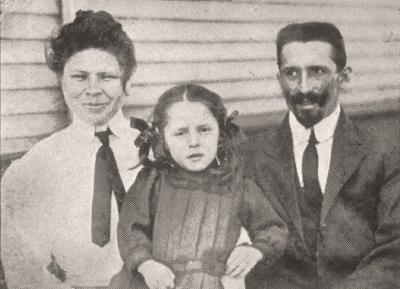
Family Kink
3rd Class
The Kink family, Anton Kink and his wife, Louise Kink-Heilmann, were the parents of 4-year-old Louise Gretchen Kink-Heilmann. They were accompanied on the voyage by Anton’s younger siblings: his brother, Vincenz Kink and his sister, Maria Kink.
On the night of April 14th, the Kink family was suddenly awakened. Rushing up, they could clearly see the iceberg that had struck the ship. They returned to their cabin, got dressed, started packing and put on their life preservers until the water starts pouring into the cabin. When they reached the Boat-Deck, they got separated from Anton’s siblings, who perished in the sinking.
Anton’s memory of that night was clear:
“A sailor took my child and handed her into one of them. My wife was also helped in by the sailors. I was touched upon the shoulder and asked to step back, whereupon my wife and child cried at the top of their voices at my being left behind. I ducked down, broke through those standing about and jumped into the boat as it was lowered.”
Their daughter, Louise Pope, remained deeply involved in Titanic remembrance. She took part in numerous commemorative events and was among the last surviving passengers of the Titanic.
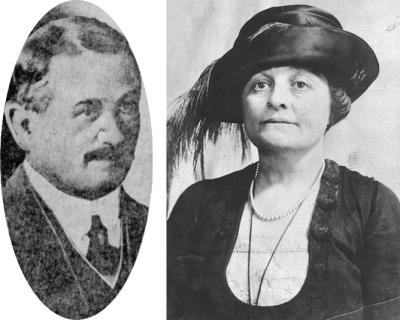
Family Taussig
1st Class
Emil and Tillie Taussig were a well-established couple from New York, traveling in first class aboard the RMS Titanic with their daughter, 18-year-old Ruth Taussig.
The Taussigs were alerted to the danger of the iceberg by a German steward. Arrived on deck, they saw Captain Smith preparing the eighth boat to be let down. A number of stewards had rushed up between the crowd. The Captain turned to them and asked if they knew how to row. They answered ‘Yes’, and were allowed to jump in.”
Only around twenty women were near the lifeboat, and all were given seats. Ruth was among the first. Tillie hesitated, saying she would not go unless her husband could come as well. Though there was space left for more, Captain Smith refused to let men board.
“One man tried to step into the lifeboat beside his wife. I heard a shot, and I am sure it was he that went down.”
“Ttwo men tore me from my husband’s side, lifted me and dropped me over the side of the deck into the lowering boat.” The boat went down with empty seats that could have held more lives, including Emil’s, who did not survive the sinking.
As their lifeboat reached the water, the four stewards who claimed to know how to row were unable to do so.
“There was only one seaman to command the boat and an English woman... took an oar and rowed until we were half a mile from the Titanic.”

CAPTAIN EDWARD J. SMITH
Captain Edward J. Smith, master of the Titanic, became a central figure in one of the most famous maritime disasters in history when he went down with his ship in 1912.
With over forty years of experience as a seaman, he took command of the Olympic in 1911. In September of that year, the Olympic was damaged in a collision with the Royal Navy cruiser Hawke. In 1912, Smith was appointed captain of the Titanic. He was present in Belfast on 2 April for the ship’s sea trials.
At around 7:30 p.m., on the 14th of April, Smith attended a private dinner party hosted by Mr and Mrs George Dunton Widener in the à la carte restaurant. Other guests included railway executive John B. Thayer and Major Archibald Butt. After dinner, Smith met with his Second Officer, Charles Lightoller, on the bridge before retiring for the night. Overwhelmed by the volume of passenger telegrams, the ship’s radio operators missed an iceberg warning from the Mesaba and cut off a transmission from the nearby Californian.
At approximately 11:40 p.m., lookouts spotted the iceberg that the Titanic would soon strike.
Shortly after the collision, Smith arrived on the bridge and assessed the damage. He soon realized the ship was sinking and ordered the crew to prepare the lifeboats. At 2:20 a.m. the following morning, the Titanic slipped beneath the dark, frigid waters of the North Atlantic, taking the captain and over 1,500 others with her.
Two official inquiries, in the United States and in Great Britain, were held into the disaster. Given the multiple iceberg warnings received, many questioned why Smith had not reduced speed or altered course. He was not found responsible for the sinking.
DISPLAY TEXTS
1. “Le Diane Chasderesse”, “Artemise” or “Diana of Versailles” by Ferdinand Barbedienne
Bronze
1880
PRIVATE COLLECTION JUAN CRUZ ERCORECA
This bronze was cast in the same mould as the Diana of Versailles, which was found in the Titanic wreck. It captures the enduring fascination and rich symbolism of Diana, the ancient goddess of the hunt and wilderness. Discovered in Italy between Nemi and Tivoli at the end of 1550, it was given to France by Pope Paul IV and became the centrepiece of the palaces of Fontaineblau and Louvre. Louis XIV then installed it in the recently completed Galerie des Glaces in the Chateau de Versailles from which it takes its most representative name. It remained there until 1798, when it returned to the Louvre where it remains today. The First Class saloons of the Olympic and the Titanic were the heart of socialising on board the ships. Designed for multiple uses, they were inspired by the Palace of Versailles, with an exquisite symmetry and above its large marble fireplace a bronze copy of Artemis being the centrepiece of the saloon. In 1986 Robert Ballard found the statue of Diana lying face up on the floor (next to the wreck of the Titanic), as if perched in the sand waiting to be found. This bronze figure by Ferdinand Barbedienne was witness to the finest of shipboard gatherings, the brutality of the sinking and its breakup, and then to more than a century of perpetual darkness. Diana proudly gazes to the right holding her quiver ready for her next hunt.
2. RMS Adriatic letter
White Star Line
Circa 1914
PRIVATE COLLECTION JUAN CRUZ ERCORECA
The RMS Adriatic was a White Star Line ocean liner launched in 1906. Designed for luxury and comfort, she primarily served the transatlantic route between Europe and America. Known for her impressive size and modern amenities, the Adriatic was one of the largest and most elegant ships of her time. She also played an active role during World War I as a troop transport.
3. John Jacob Astor book “A Journey in Other Worlds”
1894 (first edition)
PRIVATE COLLECTION JUAN CRUZ ERCORECA
John Jacob Astor IV was the wealthiest man aboard the Titanic and a member of the prominent Astor family of New York. His great-grandfather, Johann Jakob Astor, was born in 1763 in Waldorf, Germany, and emigrated to the United States in 1794. At the time of the voyage, Astor was returning home from an extended honeymoon in Paris and Egypt with his young second wife, Madeleine, who was 19 years old and pregnant. They travelled with a valet, a maid, a nurse, and their Airedale Terrier, Kitty. Astor was also a writer, inventor, and sportsman. His body was later recovered and identified by the initials on his clothing monograms and his gold pocket watch.
4. RMS Olympic first-class creamer
Porcelain
Circa 1911
PRIVATE COLLECTION JUAN CRUZ ERCORECA
This tiny creamer, made in the ‘Wisteria’ pattern for Stonier & Co. of Liverpool, is one of the most delicate porcelain items onboard. Light as a feather and extremely fragile, it is rarely found in such good condition. It was used in the First Class areas as the perfect supplement to a cup of coffee after lunch or a single cup of afternoon tea while enjoying a good read in the reception room. A similar item, was found at the Titanic wreck.
5. RMS Olympic Stonier & Co. "Gothic Arc" dinner plate
Porcelain
1912
PRIVATE COLLECTION JUAN CRUZ ERCORECA
The White Star Line commissioned Stonier & Co. of Liverpool to produce the china dinnerware. This design, called "Gothic Arch," was used in the Dining Saloon on D Deck. This hand-painted piece which is trimmed with gold, is an example of the care and luxury on board. A similar item was found in the Titanic wreck.
6. White Star Line silver fruit tray
Silver plated
Circa 1901
PRIVATE COLLECTION JUAN CRUZ ERCORECA
The White Star Line selected Elkington & Co. to provide silverware for its first- and second-class services. This oval fruit bowl, bearing the company’s house flag, offers insight into the level of luxury aboard their ships in the early 20th century. Fresh fruit in the middle of the Atlantic was both a symbol of status and a logistical achievement, one that the White Star Line expertly delivered.
7. Olympic first-class butter dish
Silver
Circa 1911
PRIVATE COLLECTION JUAN CRUZ ERCORECA
This round butter dish in Elkington & Co.’s Reed and Star pattern consists of two pieces. The first is a small, deep bowl designed to hold crushed ice; the second is a pierced dish placed on top. This clever design helped to keep the butter cool and prevented it from melting.
8. Mrs Eleanor Elkins Widener book “Cecilia Vol III” by Burney’s Work London
Published in 1782
PRIVATE COLLECTION JUAN CRUZ ERCORECA
The Wideners, Mrs. Eleanor Elkins and Mr. George Widener, were traveling back from a European tour with their elder son Harry, who had recently graduated from Harvard. They belonged to one of the most prominent families in Philadelphia, residing in Lynnewood Hall in Elkins Park. Mr. Widener and his son Harry died in the sinking. After the tragedy, Mrs. Widener donated the main library building to Harvard in honour of her son. In October 1915, she remarried Dr. Alexander Hamilton Rice, founder and director of the Harvard Institute of Geographical Exploration. This book belonged to the Wideners’ cottage in Newport, “MIRAMAR.”
9. Villeroy & Boch bathroom tile trio
White Star Line
Ceramic
Circa 1911
PRIVATE COLLECTION JUAN CRUZ ERCORECA
The ship’s common areas, such as bathrooms and crew spaces, featured ceramic tiles. The White Star Line commissioned Villeroy & Boch for several of its design pieces. The German manufacturer, renowned worldwide to this day, was founded in 1748 in Audun-le-Tiche and is currently headquartered in Mettlach, in the Saarland region. Their craftsmanship and attention to detail made them an ideal partner for furnishing the luxury liners of the era.
10. “The Ismay Line” by Wilton J. Oldham
Circa 1961
PRIVATE COLLECTION JUAN CRUZ ERCORECA
By Wilton J. Oldham
This book traces the history of the White Star Line and the influential Ismay family. It highlights Thomas Ismay’s role in building the company and his son J. Bruce Ismay’s controversial survival of the Titanic disaster. Based on family records and rare documents, it offers a unique perspective on one of maritime history’s most iconic stories.
Hastings Ismay Ex Libris Coat of Arms
J. Bruce Ismay’s cousin, Hastings Ismay, was a senior British military officer and diplomat. Lord Ismay was Winston Churchill’s chief wartime aide and the first Secretary General of NATO. He played a key role in Allied coordination during WWII and in shaping NATO’s early structure during the Cold War.
11. RMS Olympic Boullion Deck service plate
Porcelain
Circa 1911
PRIVATE COLLECTION JUAN CRUZ ERCORECA
During Atlantic crossings, passengers often spent a great deal of time walking on deck. It was very common to find a waiter with a tray offering a cup of hot tea or bouillon. This plate came from the tableware, which is why the pattern is simpler. Similar pieces, were rediscovered at the Titanic wreck site.
12. RMS Carpathia WWI soldier letter
Circa 1916
PRIVATE COLLECTION JUAN CRUZ ERCORECA
The Carpathia was the Cunard Line ship that rescued the survivors of the Titanic. Launched in 1902, she served during the First World War until 1918, when she was sunk by a German U-boat. During the war, the Carpathia was used to transport troops. This letter from a soldier to his parents is an intimate testament to a young man in combat, longing for his family back home.
13. RMS Olympic Elkington & Co. silver soup tureen
Silver
Circa 1913
PRIVATE COLLECTION JUAN CRUZ ERCORECA
This Elkington soup tureen, featuring the Reed and Star pattern, was used in First Class aboard the Olympic. Onboard menues included up to ten courses. These tureens were used to serve consommés and soups in the D Deck dining saloon. A similar item was found at the Titanic wreck.
14. RMS Olympic first-class sugar shaker
Silver
1911-1934
PRIVATE COLLECTION JUAN CRUZ ERCORECA
This tall sugar shaker by Elkington & Co. was used exclusively in the D Deck Dining Saloon for breakfast. Fresh fruit was included on the menu, and one shaker was placed on each table. A similar item was found in the Titanic wreck.
15. Royal Crown Derby Spode
White Star Line
Porcelain
1911-1934
PRIVATE COLLECTION JUAN CRUZ ERCORECA
Just as Goldsmiths & Silversmiths was selected to supply the silverware, Royal Crown Derby was commissioned to produce the porcelain for the White Star Line. They created this exclusive Louis XVI–inspired design specifically for use aboard the ship. In 2012, to mark the centenary of the sinking, Royal Crown Derby reissued the pattern in a limited production under the name ‘Titanic.’ These pieces faithfully represent the same china used aboard the ship. On the night of April 14th, Mr. and Mrs. Widener hosted a dinner in honour of Captain Smith in the À La Carte Restaurant, where they used the same china, as they used for Titanic’s final meal.
16. The À La Carte Restaurant silver service
Silver
1911-1934
PRIVATE COLLECTION JUAN CRUZ ERCORECA
The RMS Titanic and RMS Olympic were the first ships in the world to feature an À La Carte Restaurant, a hallmark of luxury and innovation. Unlike the main dining saloon, which served set meals, this exclusive venue offered a full À La Carte menu for up to 141 guests, requiring extraordinary logistics and service. Located on B Deck beside the Café Parisien, the restaurant was inspired by the Ritz hotels of London and Paris. Operated by Italian restaurateur Luigi Gatti, it provided a more intimate and refined atmosphere for First Class passengers. The silverware, specially commissioned in an Art Nouveau design, was crafted by Goldsmiths & Silversmiths, 112 Regent Street, London. Delicate examples of this design can still be seen aboard the RMS Olympic.
17. First-class cutlery
Silver
Circa 1911 – 1934
PRIVATE COLLECTION JUAN CRUZ ERCORECA
The cutlery was also crafted in Elkington’s Reed and Star pattern. These examples of forks, spoons, and knives offer a glimpse into daily life on board.
18. Rose dressing table Art Nouveau vase and brush
Pewter
Screen accurate (1997, movie)
1900-1922
This Art Nouveau vase can be seen in many scenes in Rose’s suite. The Art department paid very close attention to the items used on screen, using real antique pieces.
The tortoiseshell and silver brush is from Birmingham and features the same pattern as the one used on screen.
19. Titanic blueprint and lifeboat plaque
1996
Screen used, Titanic (1997, movie)
PRIVATE COLLECTION JUAN CRUZ ERCORECA
Every lifeboat featured plaques like this on each side, faithfully recreated for the film. Cast from an original, it represents one of the most iconic symbols of the Titanic. After the sinking, these plaques were among the few surviving identifiers of the great liner’s name.
20. The dinner set
White Star Line
Porcelain, Glass, Silver
1996
Screen used and screen accurate (1997, movie)
PRIVATE COLLECTION JUAN CRUZ ERCORECA
The Wisteria china pattern was meticulously recreated by a Mexican company during the film’s production in Rosarito in 1996. Every detail was faithfully reproduced to match the originals from 1912. The glassware features the etched White Star Line burgee flag, as if we were once again dining in 1912. The silver cutlery follows the same pattern used on screen, known as ‘Dubarry,’ originally from London.
21. Framed dinner plate
Porcelain
Screen used (1997, movie)
1996
PRIVATE COLLECTION JUAN CRUZ ERCORECA
Many of the movie props were sold after the filming by a catalog from J. Peterman Co. This dinner plate was screen used on First Class dinner scenes.
22. Titanic framed luggage labels and Jack 3rd class Ticket
1996
Screen used (1997, movie)
PRIVATE COLLECTION JUAN CRUZ ERCORECA
During filming, only one side of the ship was constructed to reduce production costs. For the Southampton boarding scene, the footage was mirrored to create the illusion of the opposite side of the ship. As a result, all visible text, from luggage labels to signage, was printed in reverse. In post-production, the images were flipped to appear visually accurate on screen.
23. Titanic 1997 D Deck reception/ dining room door grill
Wood
Circa 1996
Screen used (1997, movie)
PRIVATE COLLECTION JUAN CRUZ ERCORECA
The main First Class entrance on the RMS Titanic was located on D Deck, a detail James Cameron faithfully recreated in Titanic (1997). The double doors, which welcomed First Class passengers aboard, were meticulously designed based on historical records. In both the Titanic and her sister ship Olympic, these doors and their decorative grilles were originally crafted in bronze. However, for the film’s production, the art department replicated them in wood. The grille displayed here has been restored after sustaining damage during the filming of the sinking scenes.
24. Ken Marschall ART “Her Last Hour”
1997
PRIVATE COLLECTION JUAN CRUZ ERCORECA
Ken Marschall, born in 1950, is a renowned maritime artist celebrated for his meticulous and atmospheric paintings of historic ocean liners, most notably the RMS Titanic. His works masterfully blend artistic vision with historical accuracy, bringing to life the grandeur and tragedy of early 20th-century sea travel. Marschall’s paintings have become definitive visual interpretations of ships like the Titanic, Olympic, and Lusitania. His expertise has been sought after for major film and documentary projects, including James Cameron’s Titanic (1997), where his artwork and knowledge played a key role in recreating the ship’s interiors and exteriors. Through his art, Marschall has shaped the way generations envision maritime history.
25. SS Oceanic first-class menu
White Star Line
Circa 1909
PRIVATE COLLECTION JUAN CRUZ ERCORECA
Launched in 1902, the Oceanic was one of the “Big Four” ocean liners operated by the White Star Line. At the time of her maiden voyage, she was among the largest ships in the world. Designed for transatlantic service between Liverpool and New York, the Cedric offered both comfort and elegance. She also served as a troop transport during World War I. After nearly 30 years in service, she was retired in 1931.